Case Management System (CMS)
Guide
A Case Management System (CMS) displays real-time activity and enables project staff to manage data collection activities. Provincial staff are restricted to managing data within their assigned province whereas central staff work with data from a whole country. Team members can see running totals of all data collected over selected time periods. They can drill down to see details of individual forms and can generate reports for printing or sharing outside the system.
A CMS has a single critical functionality: the tracking of deaths and assigning Verbal Autopsy interviewers to collect detailed information related to cause of death. Secondary features include staff management and interactive mapping.
Tools
None
Software
CMS systems for SRS could be simple or complex, and they should be informed by the country and programmatic needs. For example, in pre-test stages where there might only be a single data collector, tracking cases through a spreadsheet or a series of Google or Office forms could easily be sufficient. However, as the SRS program scales nationally, this method will likely become unsustainable, leading to cases that are untracked, VAs that have not been conducted, and—ultimately—lost data.
For this reason, we recommend the use of a CMS software to track the pregnancy, birth, and death events captured through their respective event forms and enable the appropriate follow-up through case assignment to other field staff. This follow-up could include follow-ups on a pregnancy event to capture a birth event and follow-ups on a death event to capture a VA.
SRS-CMS is a basic CMS that is freely available to, and developed specifically for SRS teams. This is a standalone application that integrates with an ODK Central instance. It requires some basic Information technology skills to implement. Version 1 of the SRS-CMS system is now publicly available. The requirements for SRS-CMS include:
- Comfortability with basic IT skills
- Ability to install software from Github
- Access to an integrated development environment
- Proficiency with SQL database commands: import data & query
- Proficiency with using command line for development activities
SRS-CMS on github:
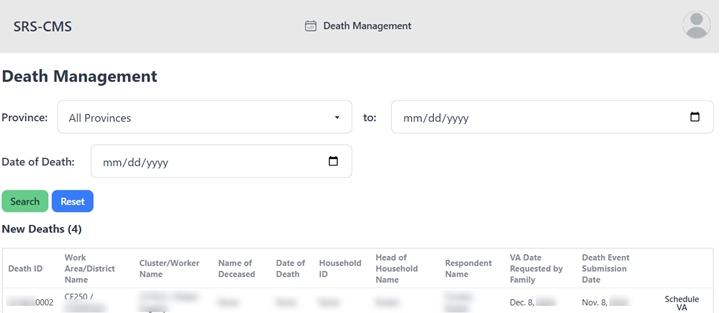
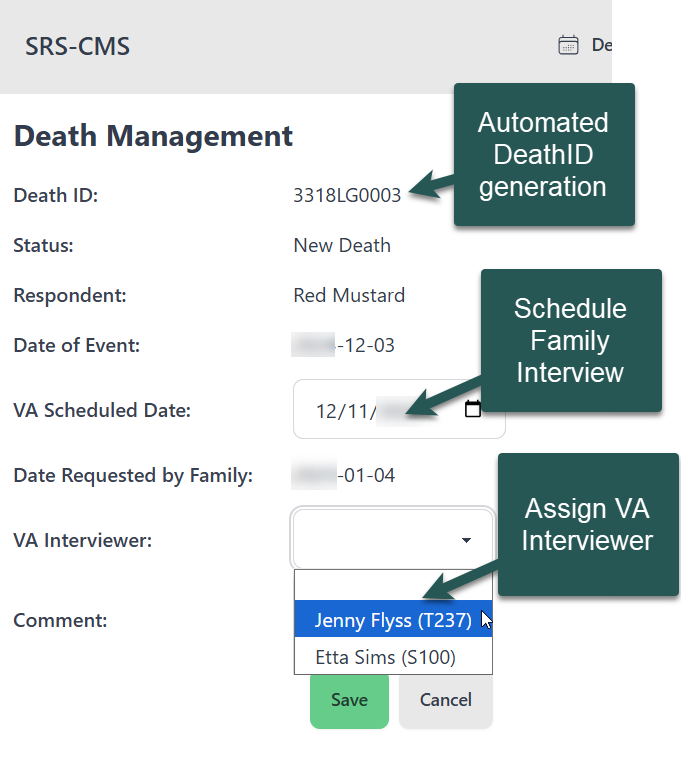
The SRS-CMS is intended to be used as a standalone CMS system alongside other SRS systems, such as Data Science platforms. However, if the country team desires to do so, they could easily engage software developers and add tight integration between any and all systems in use. An example view of the CMS Death Management page is below:
SRS-CMS features include:
- Python-based
- Enable easy interoperability with other SRS software
- Most common programming language in the world
- Synchronization with ODK Central server
-
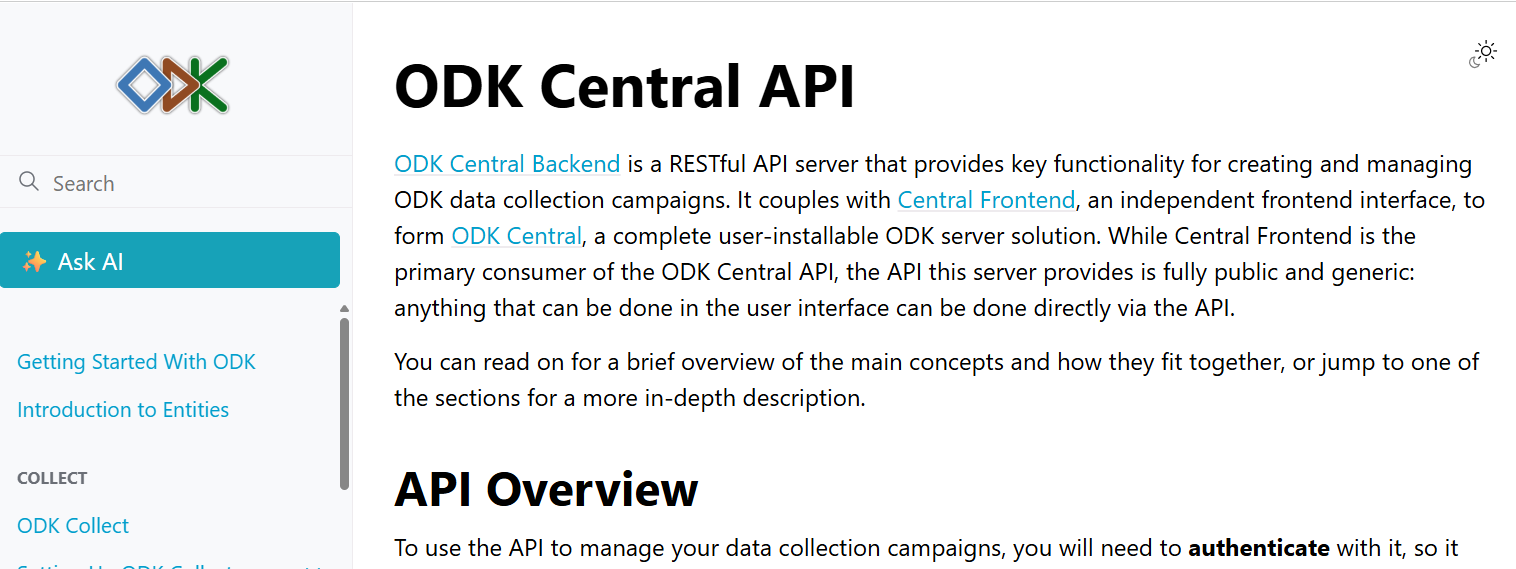
ODK Central API (via PyODK libraray)
-
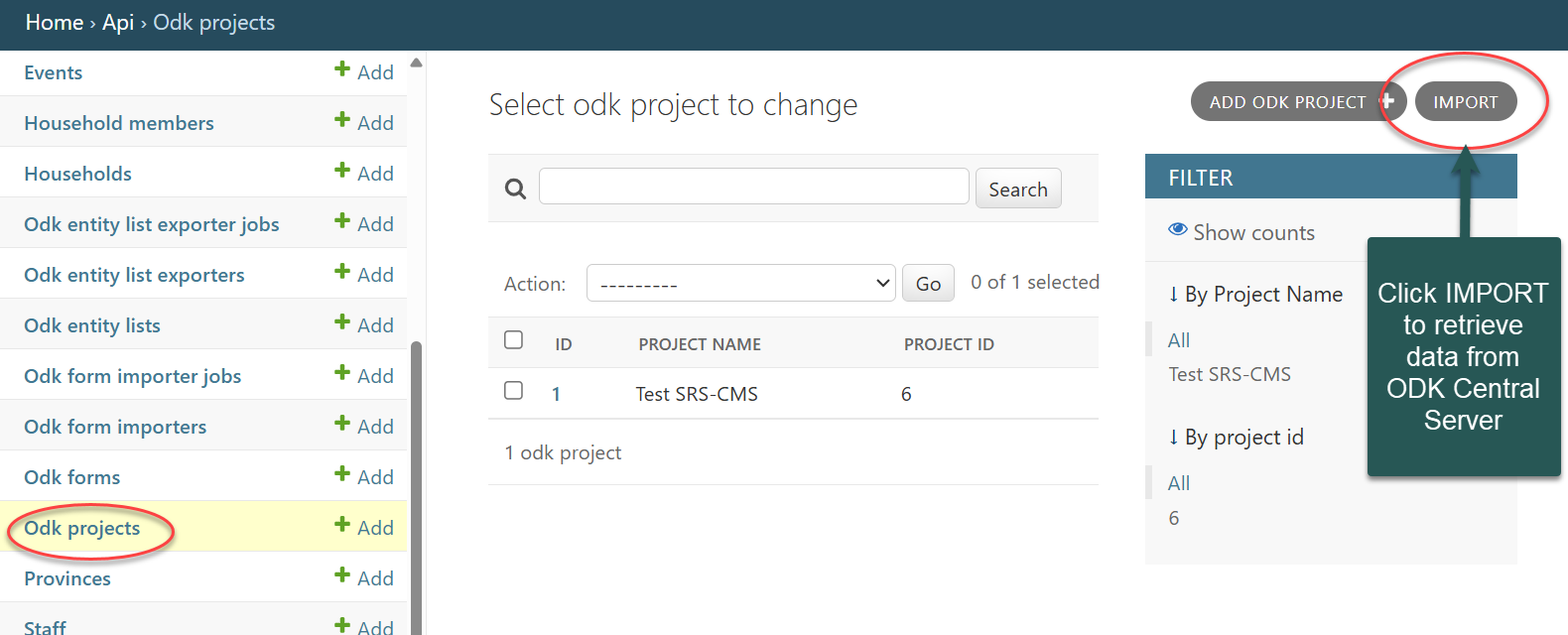
On demand or scheduled: Import Vital Events (pregnancy, pregnancy outcome, death)
-
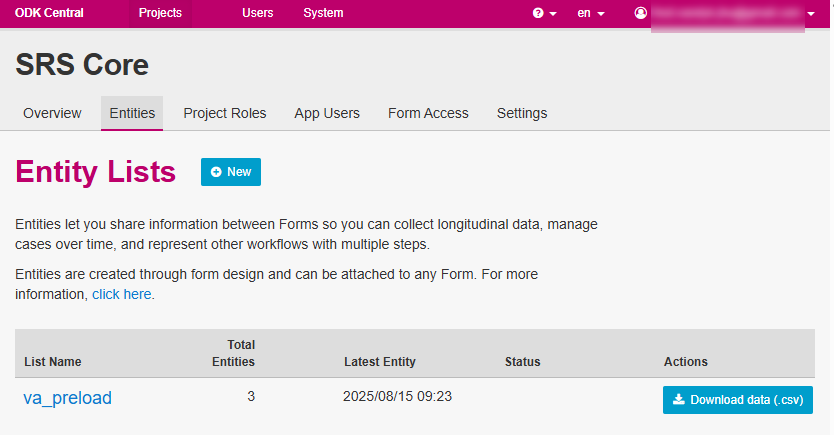
Export dataset (ODK entity) to preload Verbal Autopsy questionnaire from death event
-
- Basic ODK Forms (xlsx format)
- Verbal Autopsy(VA) Scheduling and Assignment:
- Generation of DeathID based on Cluster and Sequence from Event form
- Interviewer assignment and scheduling
- DJango Administrative Interface
- Manage ODK Server connections, projects, forms
- Manage Geographic areas and clusters
- Manage Data Collection Staff
- Role-based user access
- Provincial users work within assigned province.
- Central users work with all provinces.
- Data collection staff management
- Verbal Autopsy Interviewers
- Event data collector
- Verbal Autopsy(VA) tracking across 4 levels
- New Deaths (Death ID generation)
- Scheduled VA (Interviewer and Date)
- Completed VA
- Unmatched (Error correction)
- Docker based deployment
Stories
Mozambique
COMSA/SISCOVE Case Management
The SRS system in Mozambique (originally termed Countrywide Mortality Surveillance for Action – Mozambique [COMSA] and later renamed Sistema Comunitário de Vigilância em Saúde e de Eventos Vitais [SISCOVE]) uses a previous version of the SRS-CMS software recommended here. This system has been successfully used to track and assign cases. This exact system is not directly extensible to other countries due to its tight customization for Mozambique’s SRS, as well as technical considerations including its .Net architecture which is not easily compatible with other SRS software presented in this handbook; however, the Python-based SRS-CMS contains all relevant features and additional improvements. The screenshot below shows the COMSA/SISCOVE CMS portal and highlights relevant key functionality.
Case Management System (Death Management Page) 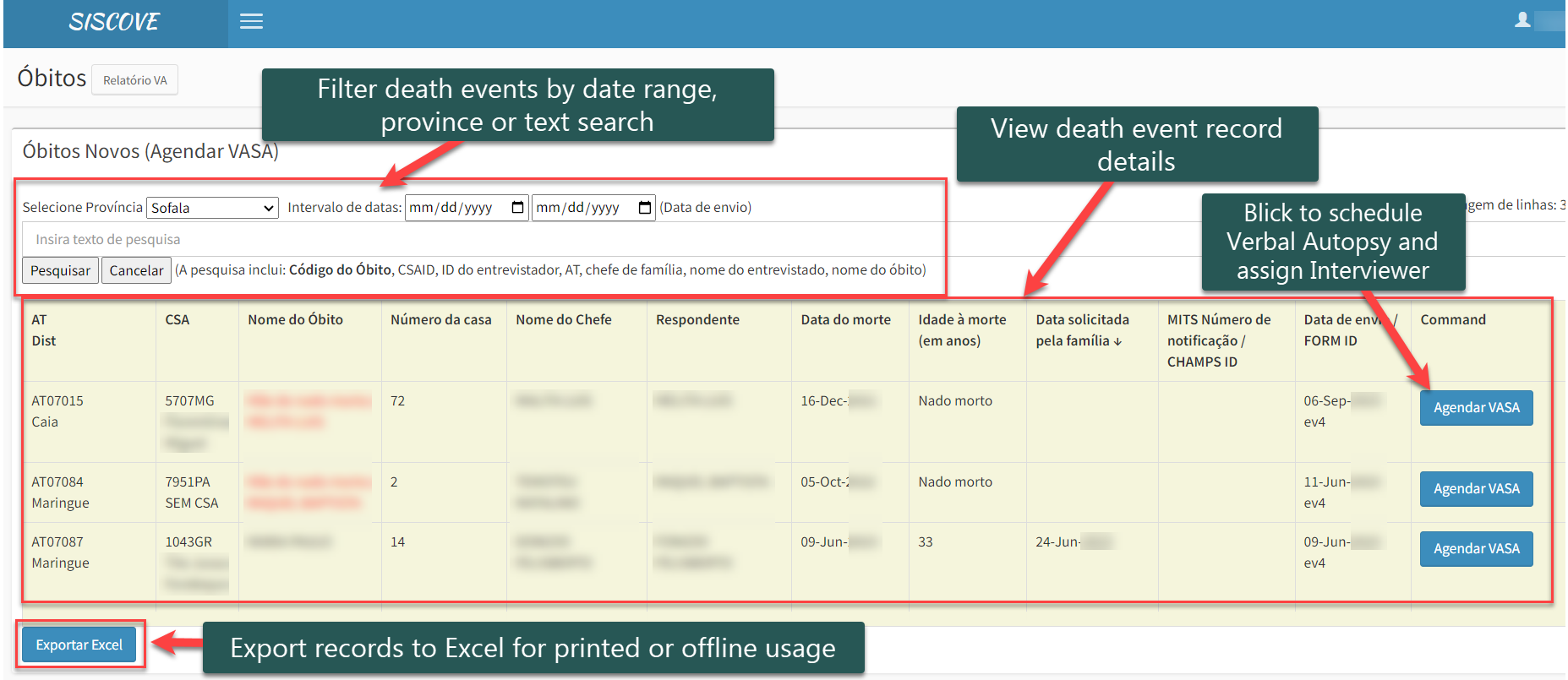
| Last updated |
|---|
| 9 January 2026 |
| Portions of this page are © 2026 The MITRE Corporation. All rights reserved. Approved for Public Release #25-2779. Distribution Unlimited. The source of this information is the Technical Assistance for Sample Registration Systems (SRS) Planning Grants, a joint project of the CDC Foundation and Swiss Tropical and Public Health Institute through the Gates Foundation SRS Grant. |